B0CNGXCBJ3
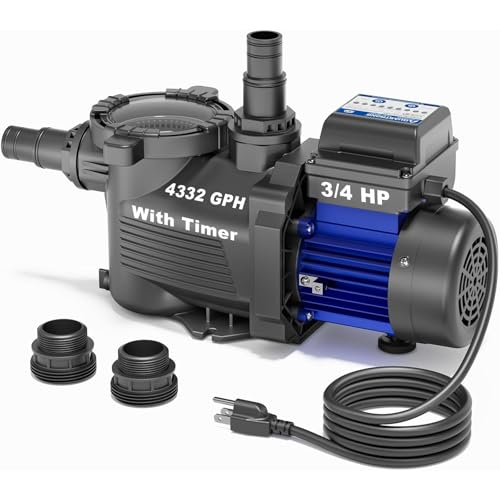
Aquastrong 3/4 HP Above-Ground Pump
Timer-equipped compact pump with 1.25- and 1.5-inch adapters.
0.75 HP4,332 GPH
Straightforward guidance for upgrading and replacing compact cartridge and sand-filter systems.
See matched products ↓As an Amazon Associate, we may earn from qualifying purchases.
The correct pump must move the required water through the actual plumbing system without exceeding the filter’s rated flow. Start with pool volume and turnover, then confirm total dynamic head, voltage, pipe size, controller requirements and service clearances.
Horsepower is useful only after those constraints are understood. Two pumps with the same nominal horsepower can produce different flow at the same head, use different connections and behave differently at low speed. Always compare the manufacturer curve and installation manual for the exact model.
Timer-equipped compact pump with 1.25- and 1.5-inch adapters.

A compact pump-and-filter package with a four-way valve.

An integrated cartridge filter pump for compatible above-ground pools.
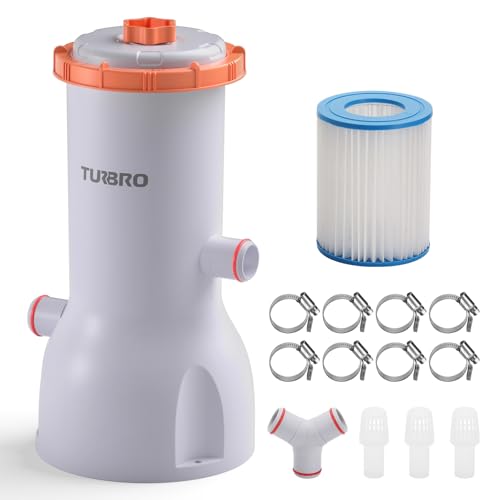
Entry-level cartridge filtration for smaller above-ground pools.

A 3/4 HP, six-way sand-filter system with a 24-hour timer.

A familiar above-ground replacement pump in a common horsepower class.

A compact cartridge filtration pump for compatible small above-ground pools.

An above-ground sand-filter package in a midrange listed flow class.

A replacement cartridge pump for compatible Flowclear above-ground systems.
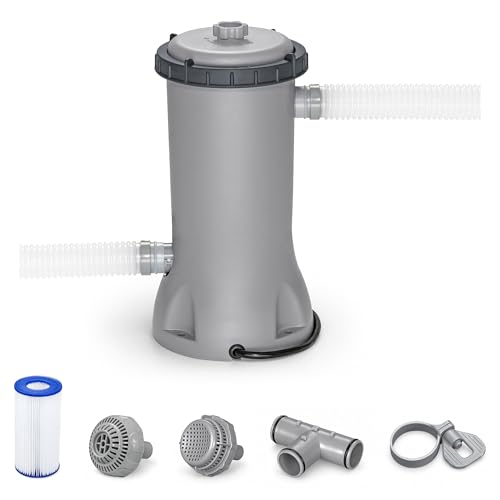
A low-flow cartridge unit for smaller compatible seasonal pools.
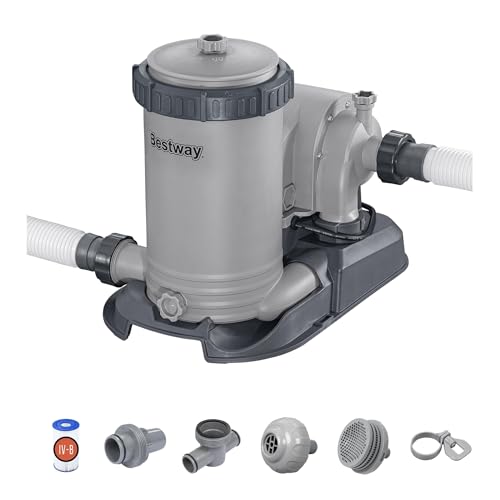
A higher-flow cartridge pump with a timer for compatible above-ground pools.

A sand-filter package listed for a broad range of compatible above-ground pool volumes.
Divide pool gallons by the desired turnover hours, then by 60. Treat that number as a starting point, not the final answer. Suction length, fittings, elevation, filter pressure, heater restriction and water features all change the operating point.
A pump that can deliver more flow than the filter or plumbing can accept may create noise, high pressure and poor efficiency. The system’s safe limit is set by its most restrictive component.
Purchase price is only one part of ownership. A controllable pump operating near its efficient range can cost less over time than an inexpensive pump that runs at full speed for every task.