The quick answer
A filter sets an upper flow boundary while debris loading changes system pressure through the cleaning cycle. For pool filter pressure too high, begin with conditions you can verify: the pool volume, plumbing, filter rating, available voltage and the jobs the circulation system must perform.
Choose the lowest-energy setup that still provides the required flow at real system resistance and stays inside every connected component’s limit.
A reliable evaluation method
A nameplate number is only a starting point. Use this sequence to avoid paying for capacity the pool cannot use—or choosing a pump that cannot support heating, cleaning and filtration.
- Find the filter's design flow in its manual or label.
- Record clean-filter pressure at a known pump speed.
- Clean or backwash according to the manufacturer's pressure guidance.
- Keep the selected pump's operating point within every component limit.
Measurements worth collecting
Write down pool gallons, pipe diameter, suction and return layout, filter model and pressure, heater or chlorinator minimum flow, supply voltage and the current pump’s full model number. Those details turn a vague shopping question into a hydraulic match.
How to compare candidates
Compare models at the same target flow and head. Then consider control range, noise, service access, union size and parts availability. Variable-speed models deserve extra attention because their schedule can be tuned after installation instead of locking the system to one operating point.
Relieve pressure completely before opening any filter clamp, lid or air-bleed assembly.
Common mistakes to avoid
The most common error is substituting horsepower for system design. Other failures include ignoring the filter’s flow ceiling, assuming advertised maximum flow is the everyday operating flow, overlooking voltage, and ordering before measuring unions and the mounting footprint.
- Do not size solely from the old motor label; the old system may already be oversized.
- Do not assume a larger pump fixes poor flow caused by a clogged filter or suction leak.
- Do not rely on maximum-flow claims without checking the corresponding head.
- Do not alter electrical protection or bonding to make a mismatched pump work.
What a good result looks like
The pump primes consistently, skimming is effective, connected equipment sees enough flow and filter pressure remains normal. On a variable-speed system, most daily circulation occurs quietly at a lower speed, with brief higher-speed periods reserved for tasks that need them.
Equipment to compare
As an Amazon Associate, we may earn from qualifying purchases.

A compact pump-and-filter package with a four-way valve.
Check this model on Amazon ↗
An integrated cartridge filter pump for compatible above-ground pools.
Check this model on Amazon ↗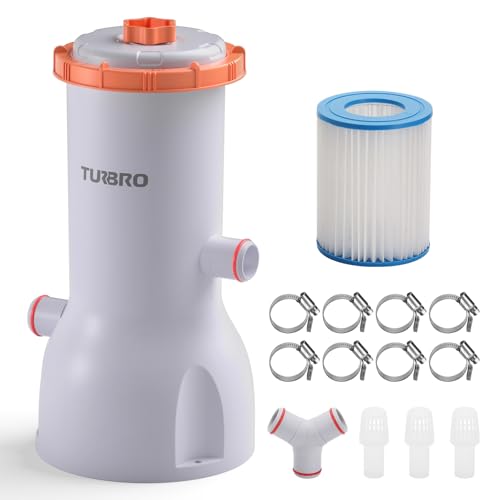
Entry-level cartridge filtration for smaller above-ground pools.
Check this model on Amazon ↗Frequently asked questions
Should I choose by horsepower?
No. Horsepower does not reveal how much water a pump moves against your system’s resistance. Use the pump curve and a target operating point.
Is more flow always better?
No. Excess flow can waste energy, increase noise and exceed filter or heater limits. The goal is sufficient controllable flow.
When should I call a professional?
Use a qualified professional for live electrical diagnostics, bonding changes, repeated breaker trips, structural filter damage or a design that cannot be verified from published specifications.